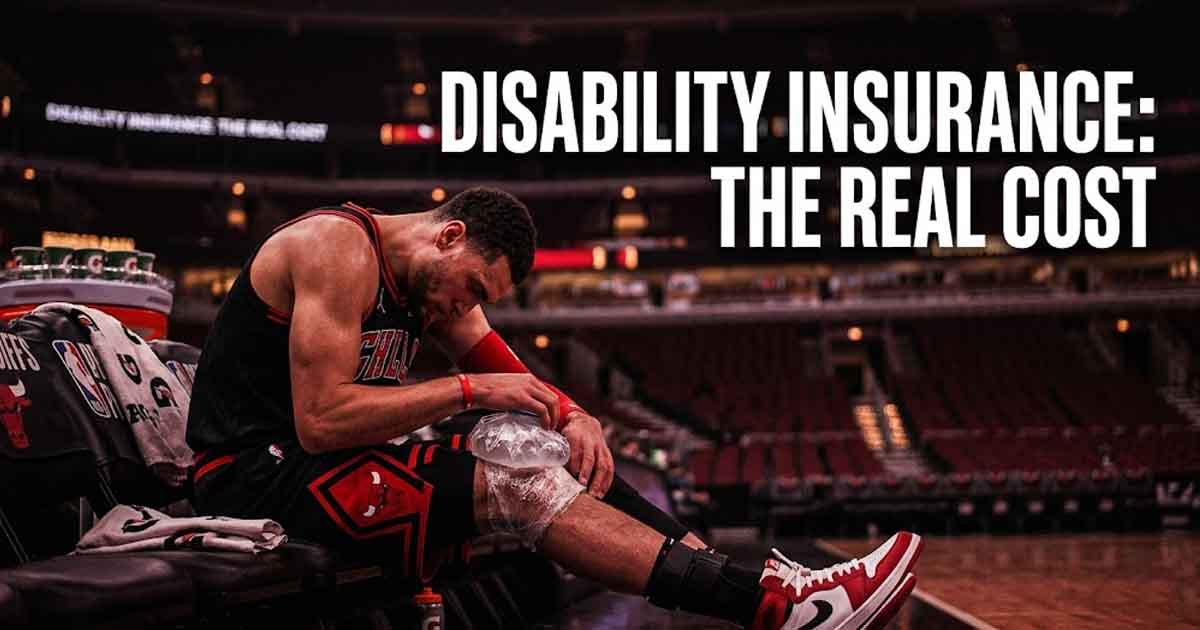
In May 2011, Derrick Rose was 22 years old, the reigning NBA Most Valuable Player, and widely regarded as the future face of the league. Chicago Bulls fans were dreaming of multiple championships. Sponsors were queuing up. Then, in the first game of the 2012 playoffs, Rose's left knee buckled. He tore his anterior cruciate ligament and missed an entire season. He came back, then tore the meniscus in the same knee. Then the other knee. By the time Rose found his footing again — years later, at lesser clubs on reduced contracts — his prime had vanished. His story is one of the most documented financial casualties in modern sport, and it remains the most powerful argument for athlete disability insurance.
What Rose's Career Loss Actually Cost Him in Earnings
At the time of his first ACL tear, Rose had recently signed a five-year, $94 million extension with the Bulls. That contract was protected — the Bulls paid him regardless. But what Rose lost was the next contract, and the one after that. His endorsement deal with Adidas — worth a reported $185 million over 13 years — survived, but the performance bonuses and escalators built into it never triggered as projected.
The financial modelling is stark. A healthy Derrick Rose, maintaining MVP-level performance through his late 20s, would have commanded another maximum contract — potentially $200 million or more. Instead, his career became a journey through mid-level exception deals, one-year contracts, and a fraction of the earning potential his talent originally promised. The total financial loss across his career, compared to a healthy version of his trajectory, is estimated in the hundreds of millions of dollars.
How Disability Insurance Works for Professional Athletes
Athlete disability insurance comes in two primary forms, and understanding the difference is critical:
Permanent Total Disability (PTD)
PTD insurance pays a lump sum when an independent medical assessment determines that the athlete is permanently and totally unable to continue their professional career. The key word is "permanently." For a player like Rose, who made multiple comeback attempts, a PTD policy would not typically activate until a definitive career-end declaration — something that was never made in his case.
Partial Disability and Residual Income Coverage
This is the coverage Rose's situation actually needed most. Partial disability insurance pays a benefit when injury reduces an athlete's ability to earn — without ending their career entirely. If a player drops from earning $20 million per year to $5 million per year because recurring injury has limited their ability to perform at the highest level, residual income coverage compensates for that reduction. This product is less commonly held by athletes, despite being the one that addresses the most common scenario.
Michael Owen's Career End: A Different Disability Story
Michael Owen's experience offers a contrasting case study. The former England, Liverpool, and Real Madrid striker had one of the most injury-shortened careers in English football history. A series of hamstring tears — beginning as far back as the 1998 World Cup — progressively reduced his explosive pace, the very quality that made him exceptional. By his early 30s, he was no longer the player he had been.
Owen retired at 33, having been unable to find a club willing to offer him a contract worth accepting. Unlike Rose, his earning years were not cut short by a single catastrophic event but by accumulated physical deterioration — a pattern that creates specific challenges for disability insurance claims because no single injury meets the threshold for PTD. Owen has subsequently spoken about financial difficulties after retirement, making his case a cautionary tale about the limits of standard disability coverage and the importance of income protection that covers gradual performance decline.
How Marco van Basten's Career Illustrates PTD in Action
For a clearer PTD story, consider Marco van Basten — the AC Milan and Netherlands legend widely regarded as one of the greatest forwards of all time. Van Basten was forced to retire at 28 due to a chronic ankle injury, never having been able to return to play after his final match in 1993. His career was officially ended by a medical declaration of permanent inability to play.
Van Basten's case is the cleanest illustration of what PTD insurance is designed for: a career definitively ended by injury at an age where years of peak earnings remained. Had he carried comprehensive PTD coverage with an insured value reflecting his earning potential at his peak, the payout would have been substantial.
What Athletes Should Do to Protect Themselves
Derrick Rose's story is not an argument for pessimism. It is an argument for preparation. Here is what every professional athlete should have in place:
- PTD insurance: Taken out early, before any injury history can create exclusions, with an insured value reflecting total career earning potential including endorsements.
- Residual income / partial disability coverage: The underrated product that protects against the Rose scenario — a career diminished but not officially ended.
- Income replacement during injury: Regular benefit payments covering lost match bonuses and performance income during recovery periods.
- Annual policy review: As career value changes, coverage must be updated to reflect it.
Derrick Rose's talent was a gift. The financial exposure that came with it — unprotected — became a lesson the sports insurance industry has not forgotten. Make sure it is not a lesson you have to learn personally.


Add a Comment