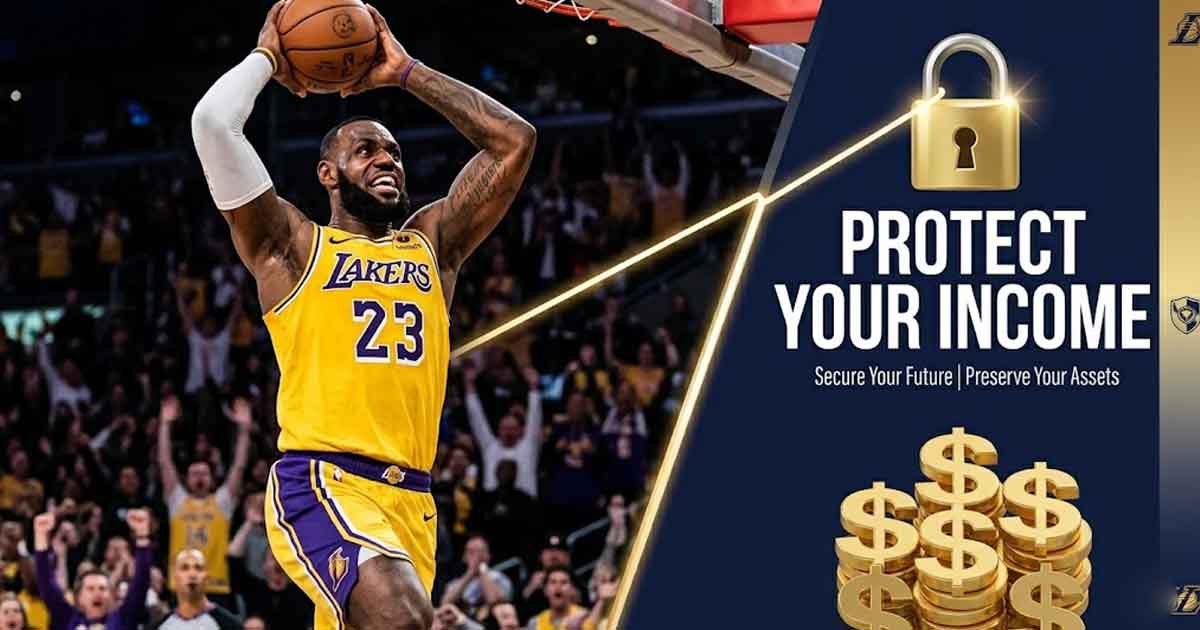
Professional sport is one of the highest-paying industries in the world — but also one of the most financially fragile. A torn ACL, a broken hand, or a serious illness can wipe out years of expected earnings in an instant. The best athletes — from LeBron James to Serena Williams — do not leave that risk to chance. They use a carefully structured combination of insurance products to protect every dollar, pound, and euro they earn.
Why LeBron, Serena and Kevin Durant Prioritise Income Protection
LeBron James reportedly invests over $1.5 million annually in body maintenance and protection — backed by layered insurance products. Serena Williams, who returned from life-threatening complications after childbirth, has spoken openly about the importance of financial protection for athletes facing health crises. Kevin Durant's Achilles rupture during the 2019 NBA Finals cost him a full season and raised serious questions about his long-term contract value — a direct financial risk that income protection insurance is designed to cover.
The financial risks for athletes include:
- Loss of contract income due to injury or illness
- Reduced market value in future contract negotiations
- Loss of endorsement deals triggered by performance clauses
- Early retirement without adequate pension provision
Core Income Protection Products for Athletes
Permanent Total Disability (PTD) Insurance
PTD insurance pays out a lump sum — typically between £500,000 and several million — if an athlete is permanently unable to continue their professional career due to injury or illness. The definition of "total disability" varies between policies, so understanding the exact trigger is critical.
Temporary Total Disability (TTD) Insurance
TTD policies cover athletes during recovery periods. Unlike PTD, these pay a weekly or monthly benefit — usually a percentage of regular match fees or salary — for the duration of the recovery period.
Loss of Value (LOV) Insurance
Loss of Value insurance is particularly popular in American college and professional sport. If a college quarterback projected as a first-round NFL Draft pick tears their ACL, LOV insurance can compensate them for the difference between their projected contract and what they actually receive.
How Marc Marquez and Tiger Woods Lost Millions Without Full Protection
MotoGP champion Marc Marquez's arm fracture led to multiple surgeries and kept him off the track for extended periods, directly affecting his sponsorship and race income. Tiger Woods, whose career was derailed by multiple knee surgeries and a serious car accident, saw several major endorsement deals restructured or cancelled. These are not abstract risks — they are documented, costly realities that the right income protection policy can mitigate.
How to Build Layered Income Protection
Elite athletes rarely rely on a single policy. A top Premier League footballer might structure protection like this:
- Club insurance: Covers the contract value to protect the club's investment in transfer fees and wages.
- Personal disability policy: An independent PTD policy to cover income beyond what the club policy provides.
- Endorsement protection: A specialist policy covering endorsement income — for players like Mohamed Salah or Marcus Rashford, this can represent more than 50% of total earnings.
- Critical illness cover: Broader health cover for non-injury conditions like cancer or heart disease.
Practical Steps to Protect Your Income Today
- Review your club or team policy: Understand exactly what your employer's insurance covers — and what it does not.
- Calculate your true earnings: Include base salary, bonuses, prize money, and endorsements when deciding coverage levels.
- Work with a specialist broker: General insurers do not understand athlete risk. Use one with a track record in sports insurance.
- Buy early: Pre-existing injuries will be excluded. The earlier in your career you take out cover, the more comprehensive your policy.
- Review annually: As your earnings grow, your coverage should grow with it.
Conclusion
Income protection for professional athletes is not just about having insurance — it is about having the right insurance, structured correctly, at the right coverage level. The athletes who sleep soundly at night are not just those who train hardest. They are the ones who have built a financial safety net as strong as their physical preparation. Start the conversation with a sports insurance specialist today.


Add a Comment