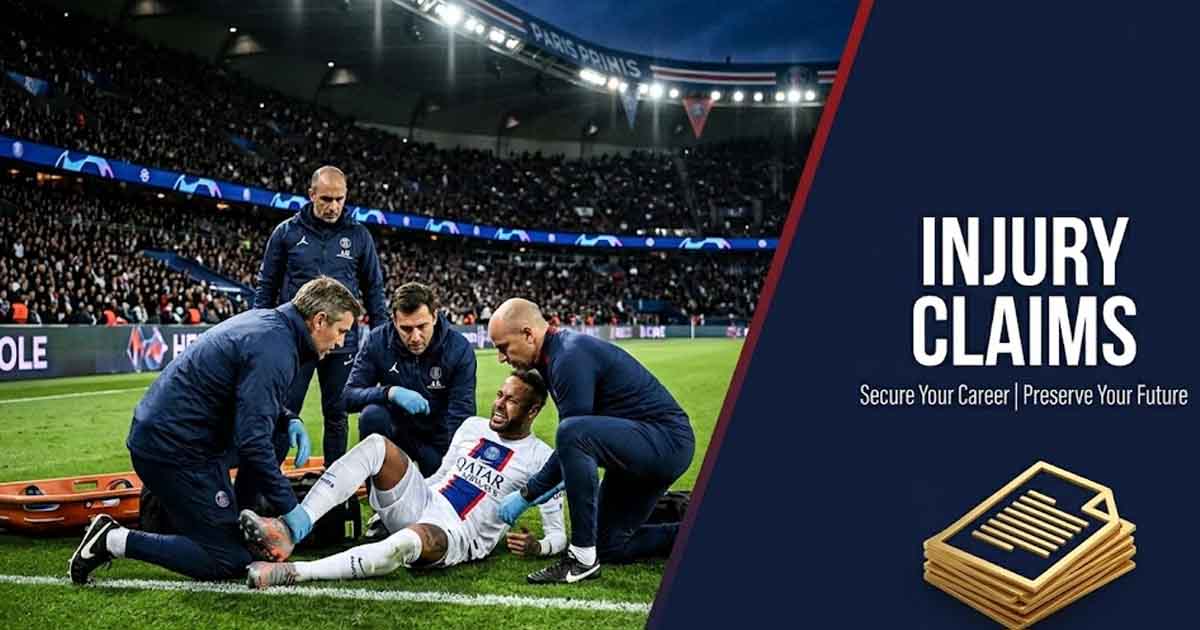
Between 2018 and 2023, Neymar Jr missed more than 200 competitive matches due to injury. The Brazilian superstar — at one point the world's most expensive footballer at €222 million — became an involuntary case study in what happens when elite athletic careers are derailed by repeated physical setbacks. His experience is now widely cited in sports insurance circles as one of the clearest arguments for comprehensive injury claims coverage. Here is what every professional athlete can learn from Neymar's saga.
Neymar's Injury Timeline and the Financial Damage
From his metatarsal fracture in February 2018 to the torn ACL he suffered playing for Al-Hilal in October 2023, Neymar's injury record is extraordinary. Each significant injury triggered a cascade of financial consequences: missed match bonuses, suspended sponsorship clauses, and months of rehabilitation costs.
PSG reportedly paid out tens of millions in wages during periods when Neymar was unable to play. From the club's perspective, their insurance policies — covering the transfer fee and wage investment — were essential. But from Neymar's personal perspective, the lessons are different: match bonuses not covered by base salary policies, image rights deals with performance triggers, and endorsement contracts with availability clauses all created uninsured income gaps that no headline figure captures.
How Injury Claims Actually Work for Elite Footballers
When a professional footballer is injured, multiple insurance mechanisms potentially activate simultaneously:
- Club insurance: Covers the club's financial exposure — wages paid during injury, potential loss of transfer value.
- Player's personal disability policy: Pays the player directly if the injury meets the policy's disability threshold.
- Temporary disability benefit: A regular payment replacing match bonuses and performance-related income lost during recovery.
- Endorsement protection: Activated when sponsors invoke availability or performance clauses that reduce or cancel payments.
The problem is that most players — even at elite level — do not have all four layers in place. Neymar's situation highlighted that even a player with the world's highest transfer fee can have significant uninsured income exposure.
The Filing Process: Where Athletes Make Costly Mistakes
Filing an injury insurance claim sounds straightforward. In practice, it is where athletes lose money they should recover. The most common mistakes:
Failing to Notify in Time
Most insurance policies have strict notification windows — typically 30 to 90 days from the date of injury. Miss this window and the insurer has grounds to dispute or deny the claim entirely. This happened to several athletes whose claims were rejected not because the injury was not covered, but because notification was delayed.
Inadequate Medical Documentation
Insurers require comprehensive medical evidence: the initial diagnosis, imaging (MRI, X-ray), the treating physician's prognosis, and the expected recovery timeline. Athletes who rely solely on club medical staff — whose primary loyalty is to the club — sometimes find their documentation does not serve their personal claim adequately.
Misunderstanding Policy Exclusions
Pre-existing conditions, activities not covered under the policy (training vs. competitive play), and injuries sustained abroad in non-sanctioned events are common exclusion triggers. Neymar's injuries were sustained in official matches, but athletes who are hurt during promotional events, unsanctioned training camps, or personal activities face a much harder claims process.
What Mohamed Salah and Kylian Mbappé Do Differently
Players who work with specialist sports insurance advisers — as Mohamed Salah and Kylian Mbappé are reported to do — structure their coverage to account for every income source, not just their base salary. Mbappé's contract at Real Madrid is understood to include specific insurance provisions negotiated directly into the deal, covering image rights income in the event of injury-related unavailability. Salah similarly has personal injury protection structured to cover his Liverpool wage, bonuses, and sponsorship income as a layered package.
Practical Steps for Athletes Filing an Injury Claim
- Notify your insurer immediately — do not wait for diagnosis confirmation before making contact.
- Get independent medical assessment — do not rely solely on the club's medical team for documentation.
- Document all income sources affected — calculate match bonuses, appearance fees, and endorsement income impacted.
- Engage a specialist sports insurance lawyer — for significant claims, legal representation pays for itself many times over.
- Keep records of all rehabilitation costs — many policies cover treatment expenses as part of the claim.
The Bigger Picture: What the Industry Has Learned
Neymar's injury saga, alongside similar high-profile cases involving Zlatan Ibrahimovic (who tore his ACL at 35 and fought his way back), Kevin Durant, and Marc Marquez, has pushed the sports insurance industry to develop more sophisticated products. Specialist insurers now offer injury claims support services — dedicated case managers who guide athletes through the claims process from day one, ensuring documentation is correct and timelines are met.
For any professional athlete reading this: your injury claim is a financial event as significant as any contract negotiation. Treat it with the same seriousness, engage the right advisers, and never assume the process will look after itself.


Add a Comment