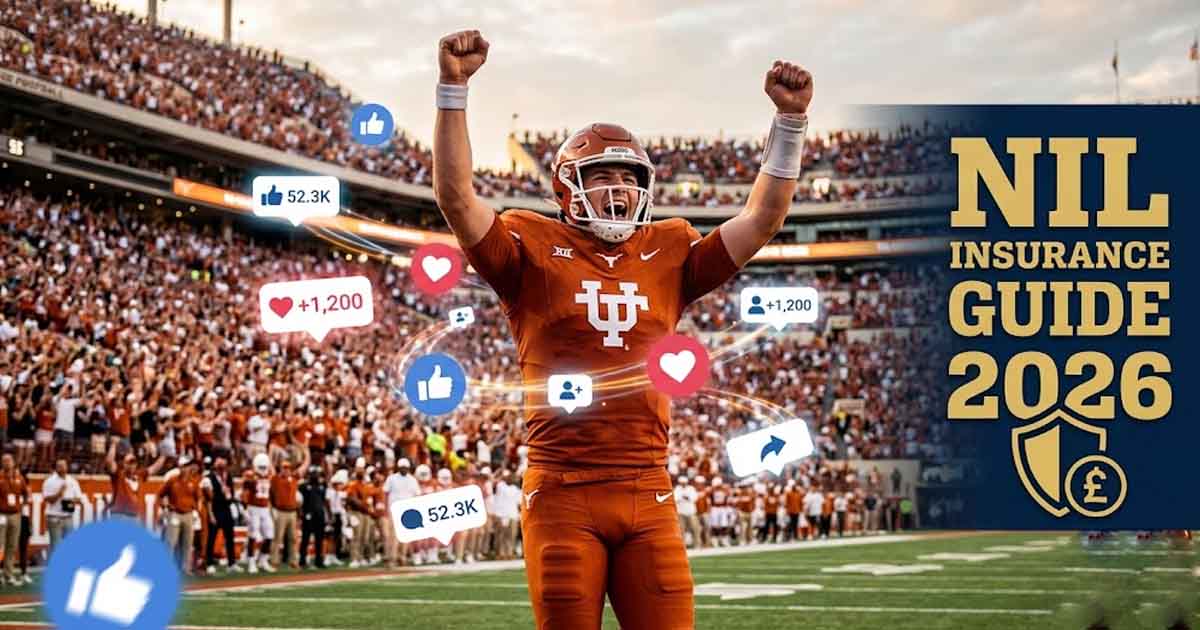
The introduction of Name, Image, and Likeness (NIL) rights for college athletes in the United States in 2021 fundamentally transformed the financial landscape of American collegiate sport. For the first time, college athletes could legally earn money from their name, image, and likeness — through sponsorship deals, social media partnerships, autograph signings, and appearances. By 2026, the most prominent college athletes are earning millions of dollars per year from NIL agreements before they have signed a single professional contract. This new financial reality has created urgent and largely unmet insurance needs that every college athlete and their advisers need to understand.
How Arch Manning and Bronny James Changed the NIL Landscape
Arch Manning — the University of Texas quarterback and grandson of Archie Manning, nephew of Peyton and Eli — became one of the most discussed NIL stories in college sport. His combination of elite athletic talent and one of the most famous surnames in American football created enormous commercial appeal before he had taken a single college snap. His NIL deals — reportedly worth millions — made him simultaneously one of the most valuable and one of the most financially exposed college athletes in the country.
Bronny James — LeBron's son, who played for USC before entering the NBA — similarly demonstrated how the combination of athletic talent and famous parentage creates extraordinary NIL value, and extraordinary insurance exposure. An injury to either player before their professional career could affect NIL deal structures that contain performance and availability clauses — creating financial losses that standard student health insurance does not begin to cover.
What NIL Income Means for Insurance Needs
Before NIL, the insurance question for college athletes was relatively straightforward: personal injury protection (covering medical costs from athletic injury), and for the very highest-profile draft prospects, Loss of Value insurance covering projected professional contract value. NIL changes this picture significantly in several ways:
NIL Income Protection
If a college athlete suffers an injury that prevents them from fulfilling their NIL commitments — appearing in advertisements, attending promotional events, maintaining their social media presence — the NIL income associated with those commitments is at risk. Some NIL contracts include force majeure clauses that excuse non-performance due to injury. Many do not. Athletes with significant NIL income need insurance that specifically covers NIL earnings as a protected income stream.
Liability Exposure from Commercial Activity
College athletes who participate in commercial activities — events, appearances, brand activations — take on liability exposure that they did not previously have. If a fan is injured at an autograph signing, if a product endorsed by an athlete causes harm, or if commercial activity results in a dispute, the athlete faces legal exposure. Personal liability insurance, covering commercial activities, is an essential addition for any college athlete with meaningful NIL activity.
Reputational Insurance
For athletes with significant social media following and brand partnerships, reputational damage — from a controversial post, a misrepresented statement, or association with a controversy — can directly impact NIL deal value. Reputational insurance is a relatively new product but is increasingly available for high-profile individuals, including college athletes with substantial NIL portfolios.
What the NCAA and Conferences Provide — and Where the Gaps Are
The NCAA provides member institutions with catastrophic injury insurance for athletes — covering costs above a threshold for injuries that result in permanent disability. Individual conferences and institutions may provide supplementary coverage. But these programmes were designed before NIL existed and do not contemplate NIL income as a protected asset. The gap between what institutional insurance provides and what a meaningful NIL earner actually needs is significant.
Practical Insurance Steps for College Athletes with NIL Deals
- Review your NIL contracts carefully: Understand exactly which provisions are triggered by injury or inability to perform, and what financial exposure that creates.
- Assess your total NIL income: The insurance need is proportional to the income at risk. Athletes with £50,000 per year in NIL income have very different insurance needs from those earning £2 million.
- Consider Loss of Value insurance: For athletes projected as high professional draft picks, LOV insurance covering projected professional contract value is the most important individual protection.
- Add personal liability coverage: Any commercial activity creates liability exposure. A modest personal liability policy is essential for any athlete participating in NIL events and appearances.
- Work with a specialist NIL adviser: The NIL market is complex and evolving rapidly. Advisers who specialise in college athlete NIL navigation — including the insurance dimensions — provide more relevant advice than general practitioners.
The NIL era has created extraordinary opportunity for college athletes. It has also created financial exposure that previous generations of college athletes never faced. The athletes who navigate it most successfully — financially as well as athletically — will be those who treat the insurance dimensions of their NIL income with the same seriousness they apply to their sport.


Add a Comment