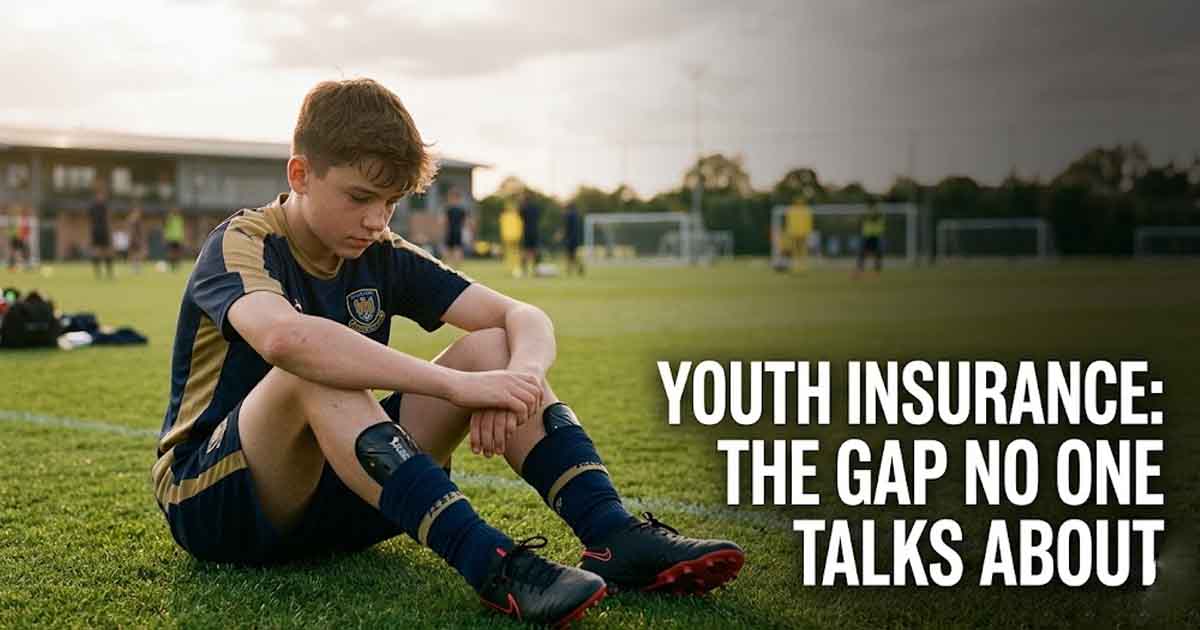
Every year, professional football clubs across Europe recruit hundreds of young players into their academies. The top academies — Manchester City's, Barcelona's La Masia, Chelsea's Cobham — attract players as young as eight or nine years old from across the world. These children train full-time from their early teenage years, travel internationally for tournaments, and are exposed to the same physical demands — and the same injury risks — as senior professionals. Yet the insurance protection provided to academy players is, in most clubs, dramatically inferior to that provided to the first team. This is one of the most overlooked vulnerabilities in professional sport, and it is affecting thousands of young athletes and their families right now.
What Barcelona, Man City and Chelsea Provide — and What They Miss
The elite academies at clubs like Barcelona, Manchester City, and Chelsea do provide a level of insurance coverage for their registered players — medical treatment for training and match injuries is typically covered, and there is usually some form of accidental death provision. But the gaps are significant:
- No income replacement: Academy players are not earning professional salaries, so there is no income to replace. But their families — who have often made significant sacrifices to support their child's football development, including relocating, paying for travel, and in some cases having a parent leave employment to manage the player's schedule — carry real financial exposure that a young player's injury can crystallise.
- Limited career value protection: If a 15-year-old academy player suffers a career-ending injury, the financial implications for their projected professional career are significant — but most academy insurance programmes have minimal provision for career value loss.
- Coverage gaps during international travel: Academy tournaments, scouting trips, and international development events create coverage complications. Standard UK or Spanish domestic insurance policies may not provide adequate coverage for injuries sustained abroad.
- Mental health: The psychological pressure on academy players — who are released at high rates in their mid-to-late teens after years of intensive training — is significant. Mental health support and coverage is largely absent from academy insurance programmes.
The Academy Release Crisis and Its Financial Fallout
Statistics published by the Professional Footballers' Association show that fewer than 1% of players who enter professional academy systems at age 9 will sign a professional contract at 18. The vast majority are released — usually between 16 and 18 — after years of full-time training during which their academic education has been secondary to their football development.
When a player is released, they typically receive a small discretionary payment from the club — but there is no standard insurance mechanism that compensates for the loss of projected career value, the disruption to academic development, or the psychological impact of having a career path they have pursued their entire childhood abruptly terminated. Some clubs — particularly those in the top tier of the Premier League — have improved their provision in recent years. But the industry standard remains inadequate.
How American Colleges Protect Young Athletes Better
The American college athletic model provides an instructive contrast. Student-athletes at NCAA Division I institutions are covered by the NCAA's Exceptional Student-Athlete Disability Insurance programme, which allows them to take out disability insurance against the risk of a career-ending injury reducing their professional draft value. The programme is imperfect — premium costs can be significant, and coverage limits may not reflect the highest projected values — but it at least acknowledges the insurance need and provides a mechanism to address it.
In European football, no equivalent programme exists at the governing body level. UEFA and national associations have not established standardised minimum insurance requirements for academy players. This regulatory gap is increasingly being discussed within the industry, and change is expected — but it has not yet arrived.
What Families of Young Athletes Should Do
Parents and guardians of young athletes in professional academies should take several proactive steps to protect their child's financial interests:
- Request a copy of the academy's insurance policy and have it reviewed by a specialist sports insurance adviser.
- Understand exactly what is covered: Medical treatment, travel, international competitions, and mental health should all be addressed.
- Consider supplementary personal insurance: A specialist youth athlete policy can fill the gaps left by club provision at relatively modest cost.
- Ensure academic continuity: If the academy education provision is disrupted by injury or release, having a clear academic pathway — not just an insurance policy — is an equally important form of protection.
- Engage a specialist adviser early: The agents and advisers who work with senior professionals are rarely involved with academy players. But those who do work in this space provide genuinely valuable protection.
What the Industry Needs to Change
The youth and amateur insurance gap in professional sport is ultimately a regulatory and governance failure. Clubs bear responsibility for ensuring adequate protection for every athlete in their care — including academy players. Governing bodies need to establish minimum insurance standards that apply across the professional pyramid, not just at senior level. Until that happens, the financial protection of young athletes depends on the proactivity of their families and advisers — and too many fall through the gap.


Add a Comment